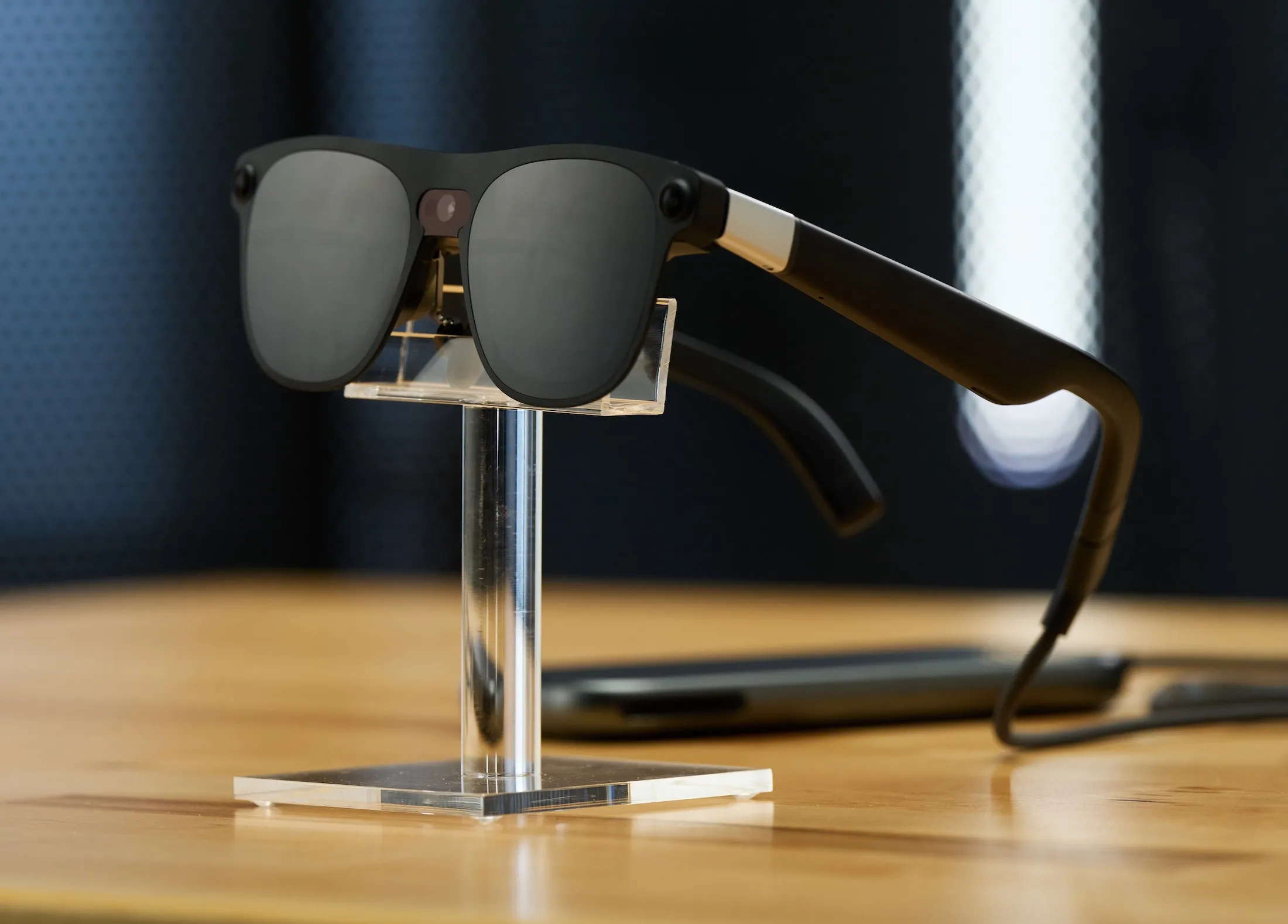
After more than a decade since its first foray into wearable eyewear, Google is making a serious comeback — this time with full-on artificial intelligence. The company has announced that its first AI-powered smart glasses will officially hit the market in 2026, targeting a mainstream audience rather than niche early adopters.
🤝 Partnerships & Purpose
To make these glasses both functional and fashionable, Google is working with well-known hardware and eyewear partners. Among them are electronics giant Samsung, and eyewear firms like Gentle Monster and Warby Parker. This mix aims to balance sleek design, comfort, and cutting-edge AI functionality.
Two Types for Two Needs
Google’s new glasses lineup will come in two distinct variants, designed to suit different user needs:
- Audio-first, “screen-free” glasses — These will feature built-in speakers, microphones, and cameras. Users will be able to interact with Google’s AI assistant (Gemini) by voice: ask questions, get real-time help, take photos, and more — no display needed.
- Display-equipped smart glasses — The second type will include a discreet in-lens screen. Through this, wearers can access turn-by-turn navigation, real-time translation, captions, directions, or other contextual information — neatly overlaid on the lens, private to the wearer.
Both designs are meant to connect to a smartphone for processing, helping keep the glasses lightweight and stylish enough for day-long wear.
What’s Changed — Why Now
Google’s earlier smart glasses efforts — the likes of previous “Google Glass” — didn’t take off. Problems ranged from bulky/uncomfortable design, poor battery life, to public privacy concerns.
This time is different: with advances in AI, lighter components, and stronger hardware partnerships, Google believes the time is finally right. By using its new operating platform (for AR / mixed-reality wearables) and tapping modern AI, the company aims to create a practical wearable that feels like a natural extension of daily life — not a gadget.
The Competitive Context
The decision comes as the “smart glasses race” heats up. Other technology giants — including companies behind already-available AI eyewear — have gained ground. Google’s re-entry signals that it wants not just to compete, but to redefine what smart glasses can be: offering subtle, everyday AI assistance that optionally augments reality — and doing so in stylish, wearable form.
What to Watch For
- Final designs and comfort — The success of wearable glasses hinges on how comfortable and “normal” they feel to wear day-long: weight, style, battery life, and ease of use will matter a lot.
- Real-world usefulness — It remains to be seen whether AI features (voice assistance, translation, navigation overlays) will truly become useful enough day-to-day to displace or complement smartphones.
- Privacy and social acceptance — As with past smart glasses, the presence of cameras/microphones in everyday eyewear may spark privacy debates. How Google handles transparency — visible indicators, user controls, data policies — could shape public perception.
- App ecosystem & features — For smart glasses to succeed beyond novelty, there needs to be a broad ecosystem: useful apps, seamless integration with existing services, and developer support.
